Naitik Baldaniya, Founder of PlanBot: The Full Story

Quick Answer: Naitik Baldaniya (born 28 August 2009, Gujarat, India) is the founder of PlanBot and PlannextTech. He wrote his first program at 12, got the idea for PlanBot at the gym in May 2024 at age 14, coded it for 22 months while studying for a Diploma in IT, and launched on Google Play on 1 March 2026. As of September 2026, PlanBot has 331 downloads, a 4.7-star rating (18 reviews), and users in India, the US, and Germany. He is 17, solo, self-taught, and publishes his real numbers - no inflated claims.
The Short Version
| Date | What happened |
|---|---|
| 28 Aug 2009 | Born in Kutch, Gujarat |
| ~2021 | Wrote first program, age 12 |
| May 2024 | PlanBot idea hits - at the gym, age 14. First line of code the same month |
| 2024 | Founded PlannextTech as the umbrella for the project |
| 1 Mar 2026 | PlanBot goes live on Google Play - age 16 |
| 6 Sep 2026 | 331 downloads, 18 reviews, 4.7-star rating, users in 3 countries |
| 2027 | Diploma in IT complete; DDCET exam next, targeting a top Ahmedabad engineering college |
The Gym Moment (May 2024)
Every founder story claims a lightbulb moment. This one is embarrassingly ordinary.
Naitik was at the gym when it hit him - not a business insight, a personal one: his time management was a mess. School, self-learning code, everything else - he was constantly busy and constantly behind. He had already cycled through the standard tools. The pattern he kept finding: every to-do app stores what you tell it, but none of them decide for you. The plan was always his job.
The thought was simple: this is exactly what AI should do. You provide the goal - "I have 4 hours, I need to finish X, Y, Z" - and the AI provides the plan.
He was 14. He started coding that month.
22 Months of Building as a Teenager
PlanBot was his first real project, and it shows in the timeline: about a year and ten months from first line of code to Play Store. No mentor, no team, no CS degree - just a diploma student in Ahmedabad learning by shipping.
Version 1, in his own words, was "broken everywhere." That is not modesty; it is the honest review every first build deserves. What matters is what came after: a long series of releases, uncountable rewrites (he has lost track of the version number), and one spectacular lesson in 2025 - he handed an AI assistant control of the entire codebase, watched it fail, and had to rewrite the whole app by hand. He now codes with AI assistance instead of delegating to it, and the difference shows in the product.
He also nearly learned unit economics the expensive way. In August 2026, keeping the server awake 24/7 for roughly 10 active users cost him about Rs 2,000 in one month - real money for a student with no revenue. That month reshaped how he thinks about infrastructure, free tiers, and what "growth at all costs" means when the costs are yours.
The Numbers, As They Are
Most founder blogs inflate here. This one does the opposite:
- 331 downloads (as of 6 September 2026)
- 4.7-star rating from 18 reviews on Google Play
- 10-20 daily active users
- Users in 3 countries: India, the United States, Germany
- Revenue: zero - the focus right now is growth, not monetization
- Team: one. No funding, no co-founder, no employees. Friends and a college faculty member who supported the journey, but every line of code is his
Why publish small numbers? Because they are real, and because they set the baseline for everything that follows. The claim "10,000+ schedules generated" would be marketing. "331 downloads and climbing" is a promise you can verify.
What He Actually Believes
- "I don't care if they copy." If a big player clones the core idea, so be it - the moat is execution speed, not secrecy.
- India runs Silicon Valley's best companies, so Indians can build world-class products from anywhere. His reason for aiming global from a small town in Kutch.
- Marketing is the current weakness - he says it himself. Sixty-eight blog posts in six months came from a Google Trends keyword strategy that worked (search traffic grew four figures in percentage terms), but paid ads and TikTok experiments failed: too small a budget for a solo student. The plan now is consistency over spend.
- Gamification without gaming. Oddly, he barely plays games - the streaks, XP, and Streak Freeze mechanics (inspired by Duolingo) came from studying what makes people come back, not from personal gaming addiction.
The Human Behind the App
He speaks four languages - Gujarati, Hindi, English, and Kutchi. His first machine was an Acer Swift 3; his daily driver is a Realme P1 5G. His phone's home screen: YouTube, Chrome, WhatsApp.
Some honest contradictions he is fine living with:
- He built an AI time-planning app, and his own time management is still a work in progress. His daily routine "keeps changing every day."
- He preaches consistent revision. Before his own exams, he studies one day before. (He knows. He is working on it.)
- His parents know and support PlanBot - but are not entirely sure what "PlannextTech" is. Many founders' families would relate.
- When the internet goes down, his productivity system of choice is: sleep.
- Classmates know he builds an app, but in a system where "everything is education," nobody treats him as competition. He is fine with that too.
His favorite feature in the app is the one that started it all - the AI plan builder. The feature he personally uses daily is the focus timer. If he had to write PlanBot's slogan himself, skipping the marketing team he does not have: "Just plan it with AI."
What's Next
Short term: a serious, consistent marketing push (the build was phase one; distribution is phase two), while finishing diploma finals and preparing for DDCET - targeting around 187 for a top engineering college in Ahmedabad. Class of 2027.
The scoreboard he plays by: 10,000+ active users is the one-year goal, and 50,000 downloads is his personal definition of "PlanBot made it." The five-year ambition for PlannextTech is stated plainly - a 100-crore company - and he is aware of exactly how hard that is. Hard is the point.
He is 17. The timeline above has roughly six decades left to fill.
PlanBot is free on Android: Download from Google Play. The app he built instead of the one he needed.
Follow Naitik
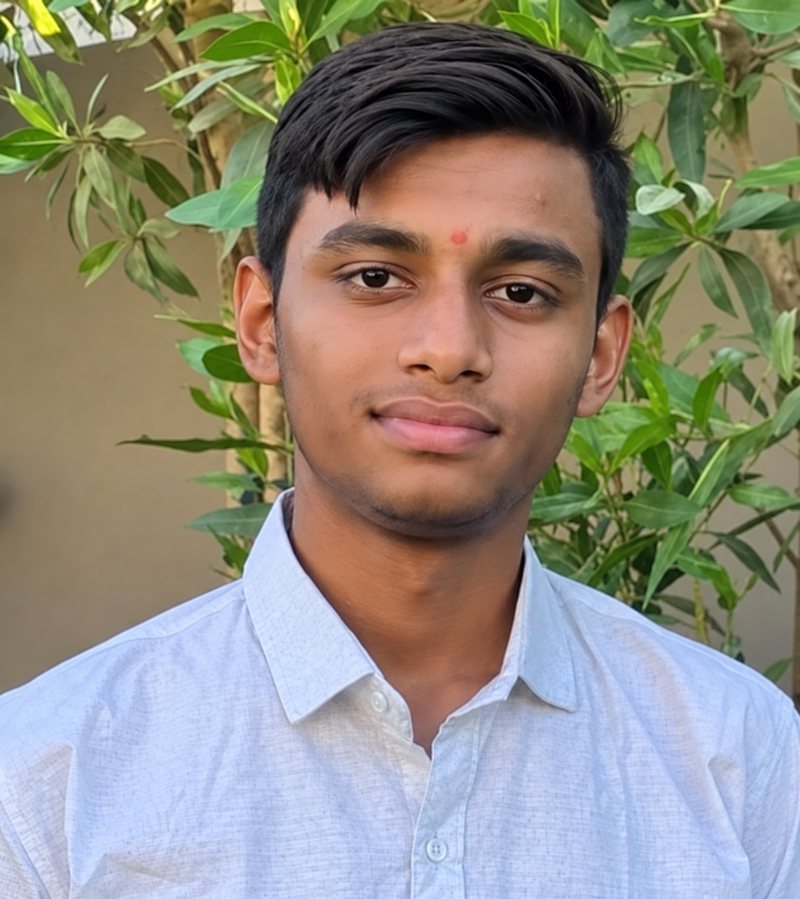
Naitik Baldaniya
Founder of PlanBot
Expertise: AI productivity systems and task automation. Naitik Baldaniya built PlanBot to help students and professionals manage their time and achieve their goals using advanced AI automation.
Try Our Free AI Productivity Calculators
Generate daily timetables, exam revision roadmaps, or deep work focus intervals in your browser with zero latency.
Ready to Start Planning with AI?
PlanBot is free on Android. Download now and create your first AI plan today.
Get PlanBot Free →Join the PlanBot Insider List
Get weekly AI productivity hacks, early access to new features, and exclusive templates. No spam, ever.
Related Articles
The Story Behind PlanBot: AI Daily Planner
Discover the origin story of PlanBot. How frustration with traditional to-do lists led to the creation of the ultimate AI scheduling assistant.
A-Level Study Plan with AI: 2 Subjects Done Right (2026)
A-Level study plan built around 3 subjects and real free periods. Spec-first revision, past paper cycles, EPQ balance, and AI daily regeneration. Free planner.
Abitur Study Plan: AI Timetable System for German Students
An Abitur study plan built on Leistungs-Kurs weighting, Altklausuren ramps, and daily AI regeneration - in English, for Gymnasium and international students.